Innovative Stroke Procedure Leads to Complete Patient Recovery
25-2-2026
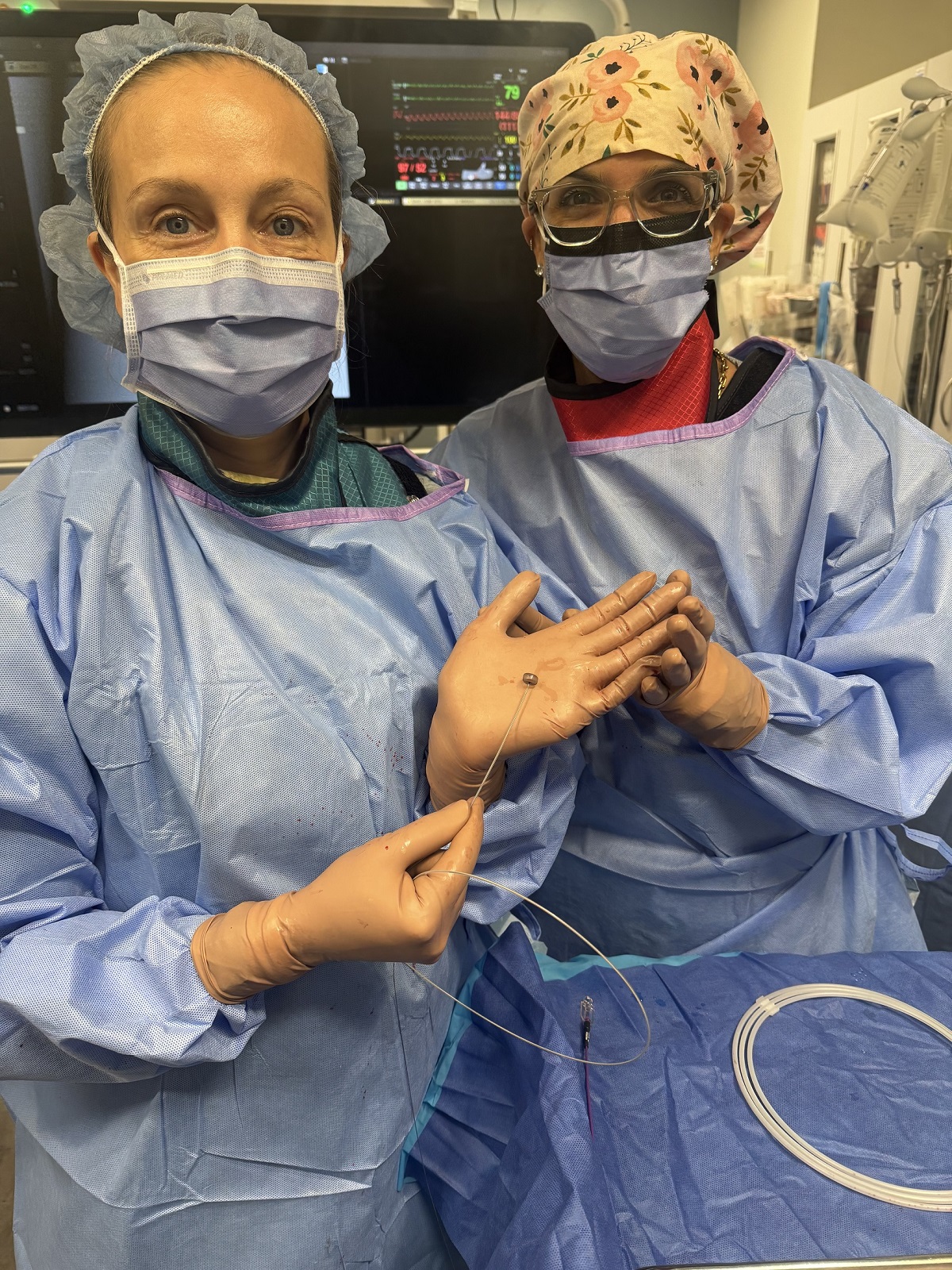
The Windsor-Essex Enhanced District Stroke Centre is excited to announce the success of a recent, highly advanced stroke treatment.
Late last year, a patient arrived with a serious type of stroke caused by a blocked blood vessel in the brain. This blockage was cutting off blood flow to the left side of the brain — an emergency that can quickly lead to lifelong problems such as difficulty speaking, moving, or feeling on one side of the body.
Dr. Erin Dyer, Dr. Maria Bres Bullrich, and their specialized team acted fast. They performed an advanced procedure called an endovascular thrombectomy (EVT), in which doctors remove a blood clot from inside the blood vessel. In this rare case, they also had to place a permanent stent — a tiny tube that helps keep the artery open — inside the brain. Not all hospitals are equipped with these stents.
“Every minute that goes by, 2-million neurons die,” explained Dr. Bullrich. “If we have to transfer that patient and take it out to another hospital where we would provide the care, a lot of brain could be already damaged by that point.”
Along with the stent, the team used a medication called Integrilin, which helps prevent new clots from forming while the artery heals. This combination restored healthy blood flow to the brain and prevented further damage.
Thanks to this quick and innovative care, the patient made a full recovery with no lasting neurological problems.
“After the doctor done, I feel fine,” said patient Van Phuong Dang. “I just want to say thank you for want the doctors have done with me and the nurse in the recovery room. She was very excellent!”
This is the first time Windsor Regional Hospital has successfully used this type of brain stent along with a newly developed Integrilin dosing protocol. The new protocol was created with the help of Dr. Matthew Rochon to ensure the medication could be given safely.
“It's never just one or two people that are doing this, and our group has worked really hard, and you can see our success,” explained Dr. Dyer. “You know, since I've been here, it's really built and I'm very proud of it."
The neuro-interventional and stroke team at WRH continues to push forward with new tools and techniques to improve treatment for both ischemic strokes (caused by blockages) and hemorrhagic strokes (caused by bleeding). Their goal is to keep improving stroke care and outcomes for patients in Windsor-Essex.
As a reminder, if you’re experiencing signs or symptoms of a stroke, call 911 immediately.